Why you don’t need to be a perfectionist to write well

neon sign of 'and breathe' on leafy background

Do you need to be a perfectionist to be a good writer?

Perfectionism seems to have replaced impostor syndrome as the anxiety du jour.

I’m here to tell you: no, it isn’t essential. It isn’t even a prerequisite for what we do.

Perfectionism is actually the enemy of creativity, and counterproductive to what you want to achieve. It encourages both an inability to let go, and self-flagellating worry.

There’s a big difference between perfectionism and commitment to excellence.

Perfectionism is setting an impossible standard to achieve, then forcing yourself to go over the same thing time and again without any hope of a satisfactory result.

Committing to excellence is delivering high quality, time after time. It’s realistic, focused productivity, without stressing over a need to get things so perfect that you tie yourself up knots over it and fail to get anywhere.

Much of this shift comes with experience: you become more relaxed and confident in your own ability.

The day we realise perfection is impossible is the day we start being truly productive.

The key is to stop fretting pointlessly, shift our mindset and get on with it.

It’s OK to accept that perfection is unachievable. Why put ourselves through it, when we could be writing?

Instead, we can stop wasting valuable time and energy over it, and commit to excellence instead.

Doing that is good enough!

How to self-edit like a pro

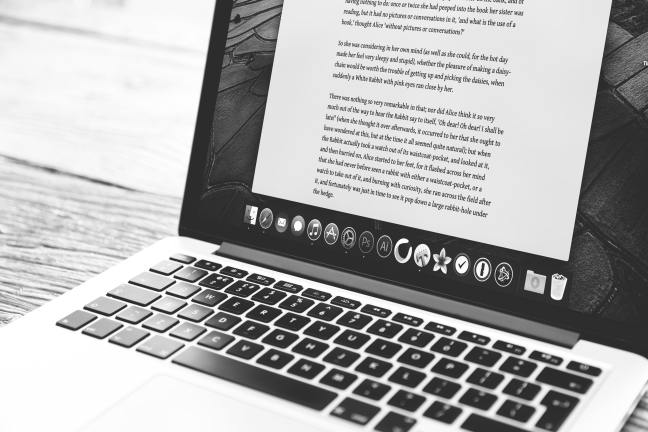
Laptop with text onscreen

Are you writing and wondering what’s the best way to get your draft into shape? You’ve got your content down, now the work of self-editing starts.

Great! But first – and this is really important – set it aside, for as long as you can.

That sounds counterintuitive, right? Here’s why.

Writing is creative, and editing is analytical. They require different mental processes and approaches – it’s hard to do both at the same time.

Trying to edit yourself as you write can get in the way. It stifles creative flow.

Separating the two, and giving your mind a clear breather between them, helps you to reset and go back in fresh.

It also helps you deal with any parts of the text that might be bugging you. Even if the answer hasn’t arrived during your time out, you’ll be in a far better headspace to go back and tackle it.

Doing nothing is a totally valid part of the creative process. It frees your mind to tick over in the background while you’re getting on with other things.

Inspired connections and ideas can pop up when we aren’t consciously focusing on our task.

So don’t feel ‘I’m not writing’ if you aren’t chained 24/7 to your keyboard. Thinking time is just as important too!

So take a good break – as long as you possibly can – then start to edit.

When you’ve done that:

  • Print out your script – it’s useful for quick notes, plus text is easier to analyse on the page than on-screen.
  • Find a quiet time and space where you’ll be undisturbed, and settle into a comfy chair with your pages.
  • Read them aloud – this helps you detach and shift perspective from your writing to the reader experience. Reading aloud also helps with phrasing and narrative flow: you can begin to see where the pauses, paragraphing and structure need to be, as well as punctuation.
  • Make notes, then go back in to edit again.

This process helps you take your script as far as you can, especially if you’re planning to work with an editor.

How do you handle drafting, and what are your challenges in editing your drafts?

I’d love to know! Tell me in the comments below.

How to get and process feedback on your writing

Typewriter with the word 'sharing' on the inserted paper

Putting writing out for critique is tough. And brave!

But it’s also essential, for writers to work on their craft. For non-fiction writing, it’s absolutely key to ensure what’s being said is clear, understood by the audience, reads well and, above all, engages them.

There are various forms of feedback you can seek for your writing, from informal to professional.

Friends and family
Informal feedback from friends and family is usually the first tentative dip into critique.

It can be useful, but there is an issue in that because loved ones are so close and care so much about us, they may not be quite so objective, or able to feel free to say what we might need to hear.

There is also the possibility that when someone external to that tight-knit group points this out (as I’m doing now!), sometimes the reaction can be a bit defended.

Our close ones don’t want to hurt us, so if they do provide notes, they’re likely to be supportive and positive – which is great, cheering on always welcome!

But the feedback might not be technically informed enough to guide us effectively in our writing, or the content. It’s a good first step – but to get where we need to go, looking outside our immediate circle is what we really need.

Beta readers
Beta reads are usually supplied by people either knowledgeable in the field we’re writing about, or are writers themselves who can pick up on elements of the text in direct relation to the genre, topic and craft.

Their perspective is the reader experience, which in turn informs the writing.

Much of the transition through feedback is making the jump from what’s in our head to what’s on the page for others.

And when we’re writing non-fiction, essentially we are writing for others rather than ourselves.

Beta input can be helpful because past a certain point, we can become so close to our own text that it’s difficult to see the wood for the trees.

This is known as ‘revision hell’, where we’ve worked so long and hard on our text that we can’t seem to make sense of it anymore, and just need a fresh perspective.

Betas can be found in writing groups, online groups and on social media; some editors read beta too both in and outside of their professional work.

If you’re writing a how-to book, it’s also a good idea to ask a knowledgeable expert/colleague or industry peer, and someone in your target audience, to read your content. Three to five readers total is a good number to get enough comments to consider.

When you have their agreement to read, give your readers a pre-prepared list of questions that you’d like them to consider in addition to their own response.

For example, you could ask them if the coverage is sufficient, if they feel you’ve missed anything, would the text benefit from inclusion of X topic, Y idea, etc. This will be specific to your script, so there is no one-size-fits-all questionnaire here.

What this does is help you get targeted feedback on any parts of the writing or content which, for example, you might be experiencing confusion over, have been bugging you, or simply aren’t sure if they work.

You can also ask for general feedback, such as did they like the content, what appealed to them – the important thing, though, is to know why.

So be sure to include open-ended questions that give your readers space to respond, and prompts them to specify their reasons.

When should I approach readers?
It’s best to approach betas before engaging an editor, and definitely not at the same time as professional assistance.

The reason is that it can confuse the process. Once you start working with an editor, the collaboration will be technical, structured and directional, targeted towards successful publication.

Pulling the process out to include what might be completely contradictory suggestions from informal and professional readers, causes lack of focus and clarity – for both you and your editor.

Your editor may need to deal with random alteration between drafts as a result of beta input that they haven’t seen before, or new content for which they haven’t already provided notes. It can also be a case of too many cooks spoiling the broth.

So do get your beta input first, take the script as far as you can, then consult a professional to help you get your script to the finish line.

Professional editing
Editors provide feedback in the form of manuscript critique and assessment, and development editing. (For more on development, see here).

In terms of critique, assessment is a high-level overview of the text, usually supplied as a report (‘editorial letter’), sometimes with notes at source in the text to show the author how and where they manifest.

The feedback here is practical and bespoke, giving you actionable notes and examples of the core strengths of your writing and content.

It also outlines any aspects of the text which might benefit from input or adjustment. It will be balanced, and take into account your purpose and intention for the script.

It’s important to reassure you here that nothing an editor says about your script is ever a diktat!

Any feedback is only a suggestion: you remain in control of your writing and content.

It’s also important to emphasise this:

Critique is not criticism!

A good editor will never slam your writing.

The feedback you receive will be measured, respectful, and in the full appreciation and understanding of your writing and publishing goals.

Handling our reaction
As I said at the start of this piece, dealing with feedback can be tough. Our writing comes from our creative source – who we are, what we think and feel – so it can be challenging to detach from that.

And it’s completely understandable.

Let me reassure you that every good writer has had to face it at some point – no matter how talented.

Even uber-famous, bestselling authors, who’ve sat down with their publishing editors and had to hear that what’s on the page hasn’t quite emerged fully-formed, pristine and ready for an adoring public!

Our first reaction might be emotional, offended, outraged, injured or simply:

No – I don’t think so…’

That’s entirely natural, and perfectly OK.

When we’re processing feedback, it’s important not to operate on that first reaction. By all means feel angry, upset or annoyed… just be sure to step away from your email while you’re feeling like that!

But seriously… read the feedback, and set it aside.

Give it time, just let your thoughts and feelings do what they need to. Then, when you’ve given it space, go back in and see if the notes resonate.

Sometimes they will, and you realise they’re helping or giving good insight into what you want to achieve.

Sometimes they won’t, and you disagree.

Sometimes, in the professional feedback context, they’ll prompt discussion between you and your editor to clarify purpose, intention and meaning.

And all of this is perfectly OK too.

See feedback as a proactive step to a positive outcome, and you’ll be well on the way to making your work the very best it can be.

If you’d like to know more about how to work with an editor and the different types of editing, take a look at my free mini-guides!

And contact me for more information here.

How to turn your story into a how-to book

Neon sign saying we are all made of storiex

You’re expert in your field and fantastic at what you do. How to shape it into a how-to book?

Authors often start with their own story.

Storytelling is hardwired into us as humans, it’s innate. We start young, and love the adventure and intrigue of a quest or journey.

Your story shows:

  • Authority
  • Knowledge
  • Insight

If you’re a businessperson, it could be from:

  • Your personal or professional background
  • How you started and scaled your enterprise
  • Successes and failures
  • How you became a leader
  • What led you to where you are today

There’s just one thing to bear in mind: readers choosing a how-to book aren’t signing up for a memoir. (Not unless it genuinely is a look-back over your career!)

They definitely want your story, but they also want practical information, solid guidance and actionable takeaways.

Self-focus is fine – in good measure. Beyond that, pages and pages of life story turn your audience into bystanders.

The key to framing your story in the how-to context is…

Service.

How to do this?

  • Tell your story first
  • Establish your authority as author
  • Then give the reader what they need.

Give them your wisdom and experience through personal anecdotes, situations and case studies dotted throughout the text, and use them to support your learning points.

(Caveat: be mindful of legal issues in case studies when mentioning real names, identifiable people and companies – libel and privacy law are a fact!)

You have a unique and valuable perspective to share, so leverage it!

Be the author that readers love to learn from and rave about.

How do you tell your business story? Let me know in the comments!

How to focus your content for business readers

View up of building to clouds

Want to know how to write great how-to content for business readers?

You’re an expert with terrific knowledge, but can’t quite work out how to present it for them?

It’s easy: just take things back to basics.

Ask yourself these three fundamental questions:

  • Who is my audience?
  • What are their problems and pain points?
  • How does my knowledge solve them?

The key to taking your content from page to people is stepping into their shoes:

  • Give practical examples that relate to them
  • Provide useful tools and takeaways
  • Keep it simple

Business readers are time-poor: they respond to helpful content that’s direct and easily accessible.

Give them what they need, and you’ll have a book they’ll rave about!

When you’re a writer, is doing nothing unproductive?

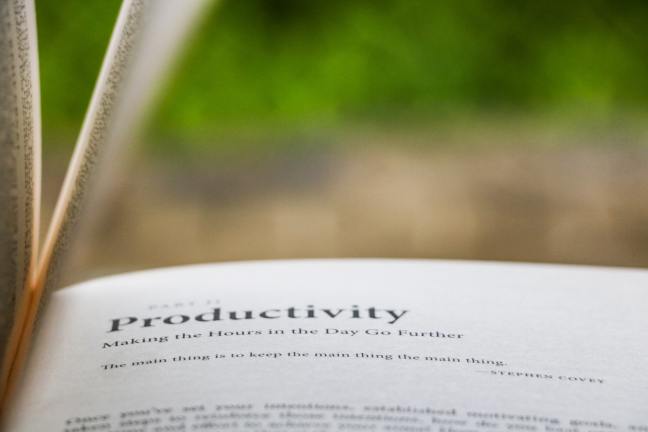
Book page with 'productivity' heading

A good question!

Well, it depends how you come at the issue. If you’ve stuff you really need to get done, then yes.

If you’re writing, then not necessarily.

‘Always be doing’ can be the enemy of creativity. We pressure ourselves to deliver when we might benefit more from stopping to take a breather instead.

Why? Because the subconscious actually does its best work when it isn’t actively concentrating on something. When it’s left to form connections, come up with fresh ideas and run with them.

Of course, this isn’t to deny the role of structure and discipline in our writing schedule. We still need to show up and get those words down.

But we also need to give our thoughts room to breathe. To solve problems and find inspiration.

This isn’t just self-care woo. A study by Stanford University has shown that stepping away from our desks and taking a walk can boost creative output by 60 per cent!

And even if we don’t have a solution to our creative problem, taking a break puts us in a much better place to be able to tackle it.

The next time you hit a writing wall, don’t plough on through. Go easy on yourself and take that break.

You never know what fantastic ideas your mind can deliver – if you give it a rest, and the chance.

How do you give yourself space when you’re writing?

Let me know in the comments!

How does green space boost your writing?

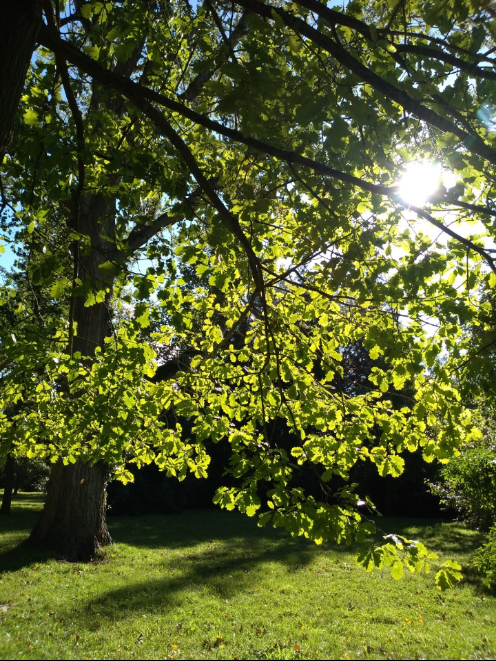
Looking up at tree canopy

Did you know that a walk in green space can boost your creativity?

It’s well-known that access to green space is great for wellbeing – especially in cities. The New Scientist reports that studies have found it also supports creative thinking.

The thing is, writing is deep work. It requires huge reserves of concentration and mental effort.

Sometimes we need to top up those reserves – and where better to do it than in beautiful green space?

Editing is hard work too, an analytical process. At some point during our writing we’ll switch from making words to shaping them, and that requires a step away to clear our mind.

Often it can be helpful to take a break between the last full stop of our piece, and going back to assess its form.

One of the best things I ever did to support my professional practice is membership of a botanic garden.

It’s my urban sanctuary and a place I can go whenever I’m mulling over a script critique, deep in developmental work, or simply need to reset between projects.

It always helps.

This is my favourite green space, captured in gorgeous light. A lovely spot to restore and revive.

Sunlight through green trees

What’s your favourite place to escape to when you’re doing deep work?


What is development editing?

Book on table with coffee cup

As an editor, I’m often asked what development editing is – especially by self-publishing authors embarking on their first book, who are perhaps unfamiliar with the task.

Some think of development as ‘structure’ – which is true, but it works on so much more.

Sometimes, inexperienced writers produce a draft, become caught up in the euphoria of having hit full stop, and go straight to a request for proofreading so they can upload to ebook and get their content out there ASAP.

That’s an admirable wish: to publish! But an important thing to bear in mind is quality. If a book isn’t quite in the best shape, it detracts from the reading experience, risks poor reviews, and can represent the author in a negative light.

Books which have been rushed out without being worked on properly can suffer from glaring typos, bad formatting, plot holes, underdeveloped or missing content, inconsistent presentation, logic breaks… the list goes on.

You’ll know only too well from your own reading experience when this has happened – and how dissatisfying it can be as a consumer to have paid good money for a product that isn’t up to scratch!

Even for experienced writers, the script is still worthy of a good copy-edit – just to ensure any stray typos, grammar and syntax, flow of the text, stylistic consistency and legals are all covered.

A copy-edit also tags and prepares the Word file for the designer to format into ebook and print: it’s a technical process.

(A brief word on legals: this can be a serious matter for both author and script, not only because of copyright and intellectual property law, but also privacy, libel, defamation and inclusivity. Editors can’t resolve legals, but they can highlight issues needing further attention and/or investigation by a rights specialist or qualified legal adviser.)

Proofreading is the last stage after your designer has typeset the text, it’s only intended for final, basic checks on the copy and layout – nothing more involved.

Sometimes, a script will go out to an editor for a copy-editing or proofreading estimate, and the editor finds they need to have a chat with the author because their review has revealed it isn’t quite ready for sentence-level work. It looks like it needs higher-level input to pull it into shape.

At this point, what they’ll usually recommend is an editorial assessment. This provides an overview of the text to identify any issues, with a report suggesting what can be addressed (known as an ‘editorial letter’; some editors provide example comments in the script as well).

This can be a great way for authors to get expert advice in the first instance, cost-effectively.

It’s worth clarifying that assessment is a diagnostic tool that doesn’t actively go in and resolve the issues in a script; instead, it simply identifies them, and recommends pathways and solutions for the author to take away and consider. From there, to work on these themselves.

For more involved input, a development edit can really help. A 360-degree analysis, it examines:

  • Language and style
  • Voice, tone and address for audience reception, clarity and engagement
  • Salience and structural repetition
  • Narrative flow, pacing and paragraphing
  • Content: thesis and execution (i.e. does the current form meet the book’s intention/purpose)
  • Overall structure, including chapter length and balance, logical progression
  • Presentation, including visuals, for the genre and market
  • Referencing system, citation/bibliography
  • Legals (any initial standouts such as libel and copyright; NB: this is usually covered in more detail during a copy-edit)

Every script is unique, as is its author, and every text presents different issues – so the advice that development delivers is tailored specially to that project.

It’s an overall, big-picture analysis of the book, with detailed notes and feedback on each draft. It can be (and often is) an iterative process.

It’s also active, involving direct interaction between author and editor on how the writing is going. It can include meetings and one-to-one discussion.

The thing about copy-editing and proofreading is that neither are the right stage to be looking at more complex factors, such as how an author expresses themselves, publication purposes, audience reception and market. By that stage, it’s assumed these have already been thought about and decided. These processes are really finessing at a more granular level.

Development editing is an investment of time, energy and finance. It would be wrong of any editor to claim that writing a book is a breeze!

But with expert guidance and the practical, actionable advice and guidance that development delivers,  it can be a much more focused, reassuring process, delivering a quality result to be really proud of.

Expert positioning: how to write for your audience and get great traction

empty whiteboard in room

You’re an expert in your field, and want to share your knowledge with the world.  That’s great!

What could be more gratifying than helping others, and leaving a body of work which future generations can benefit from, by writing a book?

The upside of course, is that in the here and now, publishing can help to position you with authority, as the go-to person for your service – and bring lots of lovely business to your door as a lead magnet.

But how does this manifest in a book? The first thing to consider needs to happen before you even sit down to write.

To position well, ask yourself the following questions:

  • Who is my audience?
  • What are their pain points?
  • How does my specific knowledge help to solve them?

It’s not uncommon for experts – businesspeople especially – to lead with the concept and start tapping away on their ideas without considering who they’re speaking to, or indeed even why.

In a book, this can manifest in confusion and lack of focus around content, form, structure, tone and pitch.

When writing a book, the one significant transition that pretty much every author has to make is from their own headspace and lens to how their audience is going to receive that content. Focusing out and writing for your reader is key in non-fiction – and essential when putting together a how-to book.

Pivoting our view so that readers can get the very best out of what’s there, is a productive route to take. (The good news is that an editor can help you with this, as we read neutrally from dual perspectives: yours as author, and also your readers’.)

One easy way to get started is to avoid putting ourselves as author above the reader, and avoid the kind of language found in a classroom.

For example, ‘In this chapter, you’re going to learn how to…’ ‘This section will teach you how to do [X]…’

Instead, ‘In this chapter, we’re going to look at…’  ‘This section guides you through the process of…’

Again, this is important in business books, because the readership is likely to be educated, intelligent professionals who are consulting that content precisely for its expertise. They can think for themselves, and might not take kindly to being addressed like they’re back at school!

Being a friendly guide and companion on the learning journey is a great level to pitch at: it presents you as warm and approachable, and makes your reader feel that you’re going through each step together.

This is just one example; as mentioned above, positioning yourself through your writing is a complex issue, with a lot to think about. Editorial assessment and development editing can help you really focus your content, structure it well and pitch it right for positive, maximum reception.

In short, here’s what you can do:

  1. Set your intention and identify your audience.
  2. Then, create the good bones to speak to them at the right level and engage them.
  3. Finally, put yourself in their shoes and write from their perspective, to solve their problems and make them happy,

A happy reader means happy book reviews. And happy reviews mean recommendations to you as an expert.

When readers scan the shelves in bookstores or online, this is the ideal reaction we’re aiming for:

‘Seriously, where has this book been all my life!’

That is what’s going to motivate them to buy – and come to you as exactly the person they’ve been needing all along.

‘Computer says no…’ how AI can fool you, and why a human editor is your best bet

Robot toy picture

Here’s a scenario.

An author just wants to make sure their text is tip-top, error-free and grammatically sound. They get Grammarly and Hemingway, and run their final text through it after getting it back from their editor.

Yikes! The checkers are having indigestion over what the editor’s done – or appears to have missed.

This is a real problem… or is it?

If we break down the situation, there are a couple of things going on here:

  • Writing checker programs run on artificial intelligence (AI)
  • Editors are human

And this is key: what the computer’s throwing up doesn’t necessarily mean that decisions taken during the edit were wrong, or important things overlooked.

Unfortunately, there are reports in the writing world of precisely that: panicked messages (and even disgruntlement) to editors about ‘mistakes’, because AI appears to have identified them.

To be fair, let’s credit such tools with the ability to run simple checks. They can help to weed out obviously glaring errors, and do help people write basic documents and emails effectively.  There is room for them in the writing space.

But fundamentally, AI is just a program. It still requires a human to make good judgement calls from what it brings up – and writing checkers are well known in the publishing industry for delivering odd suggestions and false positives.

(An editor colleague tells an amusing story of having put actual passages from Ernest Hemingway through Hemingway. The results were – how can I put this? – interesting…)

In recent times, the spelling and grammar checker in Word has also started to butt in with inappropriate suggestions around what the AI sees as redundant words, or phrasing that would alter tone, meaning and change the author’s intention.

Spellcheck in Word is well known for delivering false positives – even downright incorrect, bizarre suggestions. Again, it is only as good as its user’s ability to understand and recognise what actually might be wrong – and this is where it can present challenge, especially to authors whose first language isn’t English.

What Word is doing isn’t grammar correction, it’s interfering – and badly. The author’s wording is a creative, stylistic choice, which editors respect. Good writing means knowing grammar, and knowing when those rules can be tweaked or broken for the desired effect.

This is why, as a language professional, I don’t use writing checkers – and encourage authors not to consider AI absolute gospel either.

The difference between editorial knowledge and AI is considerable:

  • Editors look stuff up – we access extremely good reference libraries.
  • We know what we don’t know, and always consult reputable, established sources for answers.
  • We do know language by virtue of the fact that we’re human beings who use it every day.
  • We also know terms of art, expression and forms from our subject-specialist degrees and professional training.

The natural language programming that writing checkers use to parse and analyse text is only that: a mechanical program.

Until it has the nuanced analytical judgement and expertise to deal with every possible language anomaly, grammar break, stylistic quirk or creative choice that real writing involves, you’re in far better and safer hands with a qualified human being who does.

So far, that AI doesn’t exist. You can relax and trust your editor to put your writing first, and deliver well.