Book awards: what’s right for your author brand?

A gold trophy on a plain background

‘I’ve won an award!’

…Says the person who’s humbly received a gong for the East/West/North/South/global/local category of whatever they do.

I should clarify, that isn’t me!

Awards can be a thorny issue in writing, because there’s one for pretty much everything these days – and unfortunately, many of them are little more than paid promo.

It isn’t hard to win some awards. You just self-nominate, pay for entry, pay for a nice trophy for the obligatory office shelfie, and pay for a profile in associated event publicity.

There’s an awful lot of paying going on there! It all looks impressive on paper and the socials – and that, of course, is the desired effect.

But what’s it actually worth?

A while back, an author client’s book was a genuine candidate for an award. We’d worked long and hard together on it – high-quality content and product, excellent value, glowing reviews, 2x international bestseller.

I believed in this book 100%, and recommended he submit. He replied, circumspect, that he wanted to be sure of sending it to a good organisation. And he wasn’t wrong.

You have to vet awards and prizes carefully because if you’re shortlisted or win, that status can work for you. Or not, if people are in the know that it’s basically bought PR puff.

If you’re considering entering your book for an award, here’s what to look out for:

  • Nomination – is the award organisation contacting you with a random, flattering offer to submit? It’s likely paid promo, possibly a scam.
  • Organisation – who runs the awards, are they openly identified, is it legit?
  • Judges – who are they, how senior and established in the field?
  • Submission fee – is there one, and how much: cheap enough for any Tom, Dickon or Harriet to stump up, or raising rip-off alarm bells?
  • Take – is it just a prize/award, or selling a linked PR package?
  • Prestige – is it an established. well-known award and respected in your industry? What do others say about it?
  • Previous winners – what is their content, it it good quality? Check out samples and reviews.

Several books I’ve worked on for both self-publishers and publishing houses have been shortlisted and finalists for the Business Book Awards.

My client submitted to the Axiom Business Book Awards, and won a medal. It’s a similarly known and respected outfit.

These are the kinds of awards you can be confident of talking about and working for you as an author, when it comes to your book.

Otherwise, do be wary.

And just as a side note – if you’re impressed by editors trumpeting awards all over their own socials, do take a moment to check out exactly what they are… and who bestowed them.

Do the same as you would for any other award-winners’ output.

Look at what they’ve actually worked on, and download samples.

    • Are the publications good quality?
    • Are the reviews positive?
    • What do their client testimonials say?

Those awards might be real and good – but they might just be a bit less shiny than they appear, too.

How to protect your book from AI piracy

A gold skull and crossbone on a background of black compass

Book piracy has become a big issue in recent months.

In case you might not be aware of what’s been happening, LibGen is an illegal site containing millions of pirated texts from books, research and journals – all stolen and uploaded without permission.

Recently, it emerged that rather than following acceptable means to train its GenAI model, Llama, Meta simply tapped LibGen for that data and downloaded it all from there. Again, without any copyright permissions or author/publisher payment.

The Atlantic has published a search engine for the LibGen database, so you can find out if any of your published work has been pirated.

The Society of Authors has issued advice on what to do if you find it stolen, too.

There are four other things you can do to protect your work from AI training, copyright theft and piracy.

1. Update your copyright statement

The colophon (publishing imprint) page in the prelims of your book contains all its technical information, such as ISBN, national library deposit cataloguing, legal statement and so forth.

The copyright statement on that page should prohibit unauthorised appropriation and reproduction in any medium, mechanical or otherwise. If you’re already published, do review it to make sure all of that information is up-to-date, correct and complete!

To protect yourself against AI theft, you can add a specific clause to that legal statement:

‘No part of this book may be used or reproduced in any manner for the purpose of training artificial intelligence technologies or systems.’

If you’re already published in ebook, be sure to update and reissue it with that statement included. Do it for print on demand and any new or revised print editions too.

Then, if you find your work scraped by Generative AI, you have clear comeback.

2. Created by Humans

This site licenses AI usage ethically. It supports creators’ rights to own and profit from their work, requiring AI operators to seek prior permission and pay for it.

Registering with them means they can act as an agent for your content, protecting your intellectual property reproduction rights – ensuring you know who is applying to use your work, and for what purpose.

3. Contact the Good Law Project

The Good Law Project is a collective of barristers and legal practitioners in the UK that dedicates its action to fair process and outcomes for litigants.

Currently, the Project is talking to leading digital rights law firms about fighting back against Big Tech AI. This could lead to securing authors’ and creatives’ copyright and intellectual property via test cases and class action.

Legal cases set precedent from which future action can be launched and judged. If you’ve experienced a rights breach, reporting it to people who can actually do something about it is important – it supports you and the creative community, now and for the future!

If your work has been taken by AI, consider registering your interest with the Project.

4. Use Glaze and Nightshade to protect images and graphics

Your book may contain original graphs, images, illustrations, art and other visual content you’ve created.

If you’re putting that visual content up on the web, social media or other platforms online for publicity or other repurposing such as training and education or sales, it’s important to be aware that the T&Cs on some platforms (e.g. X) include automatic LLM and scraping access which can’t be switched off.

Consider using these cool resistance tools developed by tech researchers at the University of Chicago to protect your valuable intellectual property.

How do they work? Glaze and Nightshade make tiny, visually imperceptible changes to the digital file of your visual which, when AI crawlers attempt to scrape it, activates chaos! It makes AI go haywire or see something completely different.

We’re talking pixels, and your original isn’t affected.

Some visual creatives are still posting all their work freely online without any kind of tech or legal protection in place. These days, vigilance over who or what might be using, stealing or exploiting it is key.

Protect your valuable work.

You worked hard to create it, and you own it!

How to deliver for your readers

A desk with a frothy coffee, clips, watch and notebook with 'goal detail' at the top of the pages

‘I went into this book with an open mind, then slammed it shut again. It just didn’t give me what I needed.’

These are words you never want your readers to say.  Worse still, write in a review about their minds and your book!

When you’re publishing practical non-fiction – especially if you’re introducing concepts and methods to them – delivering for your audience is the no. 1 priority.  While passion for your topic is great, it isn’t really enough for a how-to book.

Of course it’s important – as an author you need to present as enthusiastic, engaged and, indeed, engaging. But much of the work of convincing a potential reader to buy what you’re selling is a rock-solid offer.

This means showing them you have the knowledge, experience and road miles to help them – and that the solutions or system you’re providing for their pain points actually work.

Readers start out from the first page looking to go on a journey with you as their expert: they have expectations, want to be shepherded and have put their money down for it.

How to do this?

1. Power-pack your introduction

  • Show your authority – what entitles you to write this book and be their guide on the page?
  • Show your experience – explain how realising and identifying the problem led you to creating this solution.
  • Show the method – give a brief outline of what the book covers, so readers can see upfront what it will do for them.

2. Deliver
Commit to serving your readers’ needs in every chapter.  Give them:

  • examples or scenarios – to show the problem and how the solution works
  • interviews or case studies – nothing adds more authenticity and proof than real-world reference
  • practical tools to facilitate insight and tackle their own situations – exercises, top tips, questionnaires, a further reading and resources section, action points and active takeaways.

3. Offer reassurance
Showing support creates relationship and makes readers warm to you. If your book is acting as a lead magnet to your business or service, this is essential!

    • Be direct, positive and empathic – save the 10X, full-on alpha stuff for the Grant Cardones of this world. That’s their own MO and brand; for your reader, it might be a turn-off.
    • Pitch to their level – establish rapport by offering your knowledge as a friend, not a teacher. Choose language and tone to reach them rather than alienate.
    • Write to reflect who you are, not what you think readers should see – don’t be afraid to be conversational. You’ll be publicising your book, so what’s on the page needs to align with how you express yourself in real life.

Putting a practical book together is so much more than sitting down to write what we think, it’s a complete package.

Apply these top tips to your writing and you’ll be set for success!

How does the law apply to your writing?

A desk with a laptop and set of brass scales, representing the law

Do you know how the law applies to your writing?

When you’re publishing content, chances are you’ll come across legal matters at some point in the process. And they could be things you might even not be aware of – with potentially serious consequences.

For example, It’s a common misconception that:

  • quoting is fine – fair dealing applies
  • anything on the internet is free to reproduce
  • creative work – song lyrics, art, photography, TV, film, novels and poetry are all fair game
  • mentioning case studies of real people or revealing someone’s personal life are okay
  • saying whatever you like about a living individual is no problem.

None of these are actually correct:

  • The first three could be copyright violation.
  • The fourth could be breach of privacy.
  • The last one could be libel.

These can show up in a manuscript. Copy-editors are trained to alert authors to legal issues in their content.

But there’s just one problem with this: by the time your script gets to copy-editing stage, it’s well into production.

  • You don’t want to find out so late that the 30 case studies of people you’ve interviewed do actually need to see what you’ve written and give their consent to publish it.
  • Or the one-line quote from a song or still image from a major film franchise are protected intellectual property, require disclosure of reproduction context – and could cost you megabucks in licensing fees.
  • Or the person you knew and talked about negatively in your memoir really doesn’t want their private actions to be revealed to the world.
  • Or that because your text is liberally decorated with inspirational epigraphs, it isn’t fair dealing and you’ll need to get permission for every single one.

The best time to address legals in a script is at draft stage. This means you can be across any issues with having to alter or even remove associated content for salience, story or support.

When clients come to me for manuscript assessment or development, I ensure that potential legal issues are highlighted for them at that point.

Not every development editor does this – but I do, because it’s far more useful for a client to know whether something is going to substantially impact their script as early as possible, rather than so late in the day that it brings their publishing schedule to a screeching halt.

I can do this, because I have a lot of experience as an editorial project manager.

But even so, there are limitations: the main one is that editors aren’t lawyers.

We always counsel clients to seek qualified legal advice from an IP or publishing lawyer, rights specialist or permissions editor specialising in copyright clearance.

Legals in a script are crucially important, even more so now with AI usage and the complication that comes with that.

When you publish, your name is on the cover. Don’t expose yourself to potential liability.

Be sure to protect yourself and stay within the law!

What I do all day

A woman with a notebook and pen, teapot and cup

Ever wondered what those of us wielding the editorial pen do all day?

Well, my day usually begins with rooibos tea or a Barleycup latte (in the winter, an indulgent oat milk hot chocolate!) and guitar practice.

Some people like to rise with the dawn, exercise, journal, do morning pages…

I don’t do early!

But first thing, whenever I can, I practise the guitar.

Pandemic lockdown sealed this for me: in isolation, I returned to classical music and am so enjoying tackling canon pieces by Tárrega and Barrios.

I’ve set myself the challenge of learning Julia Florida by the end of the year.

It’s a beautiful piece (here’s how it’s played properly – not by me!).

The guitar has been a part of my life for nearly five decades. It’s essential to me both as a musical love and commitment to discipline. Like most things in life, practice never ends!

Afterwards I hit my desk, checking messages, social media and my schedule. If I’m on an editing commission I get straight on with the task, working through to lunch.

As an editor specialising in non-fiction, on any given day I could be copy or line-editing a book, working on a report for a think-tank, editing marketing, training or educational materials, or subbing website copy.

I also spend a great deal of time working with independent authors and self-publishers. I could be doing a structural edit for a book, reading and writing a report for a manuscript critique, working through notes for a development edit, curating pictures or writing blurb and online promo copy.

Equally, I could be on a call with a client to discuss their latest stage of writing and development progress.

Working directly with authors is incredibly rewarding. The process is as much about positive and happy collaboration as it is about what’s on the page – and when the fit is right, it’s a great experience!

As an editor, I’m deeply privileged to be able to help writers – especially new ones – actualise their creativity and achieve their dream of publication. Watching them find their voice and grow in confidence is a really gratifying part of my job.

Lunch is usually something healthy and quick, then I’ll run errands or go for a short walk. When you work at home it’s important to break up your day, so I try to get away from my desk for a little while.

In the afternoon I return to my commission and break again midway for tea and a homemade sweet treat.

(You’ve guessed it – food is a significant part of my working day. Rocky Road is my favourite – thanks Nigella!)


Editing is a mentally demanding job, it’s better to do deep work when your mind is fresh. The later afternoon is generally about doing less detailed tasks, and using the available time to look at what needs doing the next day.

When I’m not on editorial commissions, I use the time to regroup.

Working on your business is just as important as working in it, so researching, thinking time and connecting with others are all invaluable.

No matter how experienced you are, investing time in continuing professional development is essential too – keeping abreast of industry developments, and staying up-to-date on skills and training.

However, one of the nicest things about being a freelancer is is being able to carve out some virtual time with fellow independents and professional society colleagues to catch up with what they’re doing.

This is one of the joys of working for yourself: the freedom to plan your own time.

Aside from editing, I also write. Editing is a highly analytical profession, and freeing yourself to flex your own creative muscles restores balance.

Moreover, editors need to study the craft of writing and, aside from actually reading creative writing, there’s no better way than to get stuck in and experience it yourself.

I’ve been blogging and writing articles since the early 2000s, and found it to be a great way to hone writing skills, as it’s short form.

This forces you to do four things:

  1. commit to writing regularly
  2. deep-dive into structure and sense
  3. edit ruthlessly and make every word count
  4. keep your audience engaged.

No matter what my schedule, I tend to stop around 5pm. I’m a firm believer in not working late – not unless you absolutely have to.

Structure is key to productivity, and space to recharge is important, especially after a day of deep work.

Sometimes a project really is urgent and you have to do long days or work unsocial hours, which is fine – but a good work–life balance is crucial when you’re a creative.

Downtime is just as relevant to replenish the mind for another day doing what I love: working with the written word.

For more about me and my work, check out my ‘Meet Our Members’ profile at the CIEP!

International Women’s Day: How I support women in their work

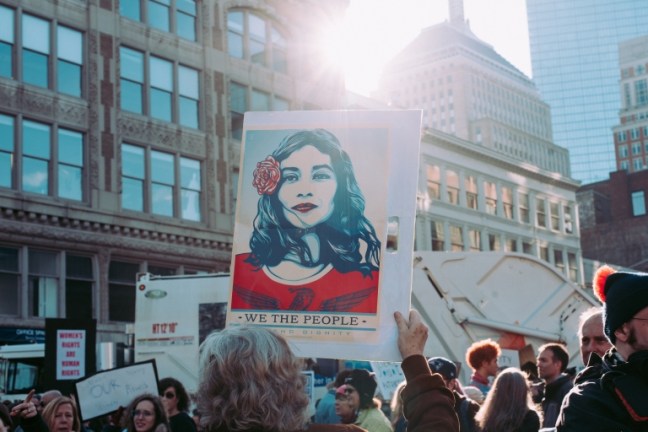
A women's march showing a banner of a beautiful woman with a red rose in her hair and the caption 'We the people'

The theme of this year’s International Women’s Day is ‘Inspire Inclusion’.

As an editor and woman in business, I understand just how hard it can be for us to make that work.

For decades, my own industry – publishing – was dominated at the top by pale, stale and male C-suites that overlooked the talent in the majority gender of its workforce: women.

And failed to pay us decently for it, too: the gender pay gap is real.

Women CEOs and publishers like Gail Rebuck and Carmen Callil were the exception, not the norm.

Unfortunately, there’s also some way to go in publishing around diversity. The major publishers are doing something about this with internship programmes and recruitment drives, but the bald fact is that in recent years, publishing has become a classed industry.

Young people wanting to get in might well struggle without money or the right connections. It’s impossible for some to live on free or low-paid placements.

I’ve been at the helm of my own editorial business for 24 years now, and am free to make choices about the projects I take on.

One of those choices is to support writers that give back and uplift the people in their industries.

I’m incredibly proud to have collaborated with these inspirational women authors.

Julia Elliott Brown

Cover of Raise: The female founder's guide to securing investment, gold arrow pointing up towards the right-hand corner on a purple backgroundJulia Elliott Brown is the author of Raise: The Female Founder’s Guide to Securing Investment.

A powerhouse gender funding gap campaigner and entrepreneurial coach for female founders, Julia is a founder and CEO who’s been there and has the war stories to prove it, having created several successful businesses.

She is strong, warm, collaborative and absolutely walks the talk.

Raise was an important book to me. I immediately recognised the struggle Julia expressed on the page that women experience in corporate life.

Getting enterprises started can be an uphill battle. I was fully on board with Julia’s message, and wanted to help.

Raise is a landmark title: it’s the very first book on entrepreneurial fundraising written by a woman for women.

It went bestseller on release, and was shortlisted for the Business Book Awards 2023. It’s been read by thousands of women entrepreneurs, and continues to do wonderful work for them in the world.

Barbara Koenen-Geerdink

Cover of Beyond Billable Hours: Your guide to career success in professional services firms by Barbara Koenen-GeerdinkI really enjoyed working with Barbara on her guide to uplift early career professionals in service firms.

That kind of environment can be seriously tough. The law as a profession has a high level of burnout. I’ve witnessed that grind firsthand, having worked for years with lawyers in magic circle firms (and spent a short time in one myself).

It can be a hard alpha culture: the pressure to bill and beauty parade is intense. In the big, prestigious international firms, basically you marry your job. You need to be prepared to work all the hours heaven sends, and pretty much forget what your friends or family look like if you want into the partnership track.

In short, you need grit to thrive in such a setting, which can be especially challenging for women. Barbara’s advice is savvy from the off, foregrounding emotional intelligence, self-care and achievable goal-setting.

Barbara has a lovely spirit about her, and as the business and development director of a major law firm in the Middle East, really knows her stuff. Her book is an invaluable survival guide for starting out smart and getting on in the corporate jungle.

Kate Minchin

As an Cover of 'Always Time for Coffee: A down-to-earth guide for frontline managers, team leaders and supervisorsarts industry professional, having managed and led teams at prestigious institutions such as Historic Royal Palaces and the Ashmolean Museum in Oxford, Kate recognised a significant gap in the literature for front-line staff.

In our initial conversation, Kate told me that so many books in the genre are high-level, aimed at the boardroom and read like a business school thesis.

And she was right.

That kind of book simply doesn’t serve her tribe: the team leaders and junior/middle managers at the day-to-day core of the business, navigating highly pressured workloads. They’re facing the public and keeping those operational wheels turning.

So her idea for Always Time for Coffee was born, as many of the mentoring, problem-solving and collegial conversations Kate had as a leader were simply over coffee. She wanted the book to read that way: open, friendly, easy to access.

Kate is an excellent writer: much of our work together was to give readers the experience of an informal sit-down with her.

I loved working with Kate. She is funny, direct and insightful: it’s obvious why she has been so successful and well-liked in her own management roles.

The book continues to receive consistent five-star reviews. Interesting to note that senior leaders in the arts and other sectors have gained great value from it too.

Pilar Orti and Maya Middlemiss

Cover of Thinking Remote: Inspiration for Leaders of Distributed Teams by Pilar Orti and Maya MiddlemissThinking Remote: Inspiration for Leaders of Distributed Teams by Pilar Orti and Maya Middlemiss could not have come at a more opportune moment.

When I worked on this book with Pilar and Maya at the end of 2018, no one could possibly have foreseen the global tsunami of Covid on the horizon.

The business world was still very much an in-person, ‘in the office where we can see you’ culture.

But Pilar and Maya had already recognised that remote teams were becoming more popular – and that this kind of management needs a very different approach.

As time has passed, we’ve become increasingly aware of the importance of different psychologies in the workplace – especially when people are based all over the globe.

The work that Pilar and Maya do as consultants centres on change management and optimum performance. How we can incorporate those principles in a practical way, to ensure everyone feels included, safe and productive in teams, has become a key factor: not only in the business literature, but in successful day-to-day staff management.

And, of course, when Covid arrived in early 2020, this book was ahead of the curve: an important resource for organisations now suddenly having to firefight a situation they couldn’t control.

The book covers how to manage technology, lead effective virtual meetings, attend to employee wellbeing and more. It’s a deeply practical and empathic guide to working remotely.

As someone who has done this myself for decades, I recognised a lot of what Pilar and Maya were discussing in this book. And it was good.

I couldn’t be happier to have been a part of bringing this resource to a sector that really needed it – much more than they realised.

Want to know how to write successfully? Study a musician

A black grand piano with two pieces of sheet music resting on the top

On my usual walk, I pass by the home of a classical pianist. Sometimes she’s tutoring, while others she’s at the piano alone.

When she was practising a particular piece day after day, I noticed her faltering at the same place. The music would flow, you could hear it from the street… then veer horribly off-key and stop.

Exactly the same bar of this thing, she’d hit a wrong note.

The thing about musicians is, they aren’t afraid of imperfection.

In fact, they accept they’re unlikely to get a new piece right until they’ve committed it to memory, practised seriously hard and refined their interpretation.

Only then are they truly happy it’s done and ready to perform. It takes time – and they understand it’s all part of the process.

Musicians are patient. They frame steady, incremental progress – and all those stumbles along the way – as a motivator to keep going and master what they’re learning.

Writing is the same: it can take time, discipline, lots of thinking and revision.

Drafting is a process of really getting to know your script… and if you’re a new writer, your own ability. You might need to dig deep and plug away to get there.

But what you can do is follow the musician’s method:

  • slow down – don’t rush it
  • break up the task into stages
  • master each one at a time

– and go easy on yourself!

Refining your work to the point that it’s ready for the world can be demanding, but just think of the reward at the end. Picture yourself holding your book in your hand and saying: ‘I wrote this!’

You’ve created something amazing for others to enjoy, value and appreciate.

About a week later, I passed by the pianist’s home. That piece which had dogged her so badly floated free from her window – intact, replete… beautiful.

She’d nailed it.

I did a little jump for joy outside, as those perfect notes shone in the air.

Review of the year 2023

A cake with white icing and winter decorations, with lettered icing '2023'

It’s the end of 2023, so time to pause and reflect on the last 12 months in life and business!

Health-wise, I’ve managed another year without contracting Covid. (I think I must be one of the few people left who still haven’t had it. And I’d like it to stay that way…)

Highlights of the year
Every book I take on for a client is important to me. This year, a particular success was working on a career book for new entrants to a creative industry.

My client gave this lovely review:

Testimonial reads: "As a first time author, and having not written anything of any length, ever, I needed a lot of help through the process. Lisa is thorough, patient and skilled. We achieved a great result together and my book is very much improved by our collaboration. Thank you Lisa!"

I worked with the client over a number of months to take the project from first draft critique, right through development to finished, copy-edited script ready for design.

It went bestseller on release, and is garnering five-star reviews.

The reason I wanted to take on this book is because creatives are my tribe – and because the sector it serves is devoid of practical, real-world support for entrants and early-career professionals. They’re taught their craft in education, but they aren’t prepared by it to enter the business world and make that skill and artistry pay.

This is why I love my job so much. I get to shepherd author expertise into a product that gives genuine help and value to the people who need it.

It makes me even happier when that person is a first-time writer. Embarking on the authoring journey is brave. It takes courage to publish, so sometimes my role can be as much about offering support, encouragement and reassurance as it is the technical side of things.

For authors, there’s nothing like the feeling when you unbox your first copy, hold it in your hand and say: ‘I wrote this.’

It’s a major moment – and it should be. Writing a book is a serious achievement!

Cover of Raise: The female founder's guide to securing investment, gold arrow pointing up towards the right-hand corner on a purple backgroundRaise, which published in 2022, celebrated its first ‘bookversary’ this year, and was released in audiobook in April.

It was shortlisted in the Specialist Business Book category at the Business Book Awards 2023.

This book has been raved about by women CEOs and founders, who’ve found it a truly practical guide.

I’m enormously proud to have been its editor, and of Julia, its brilliant author, who worked incredibly hard to ensure it published well to the world.

New mini-guides
This year I added four new mini-guides to my resources on writing and editing to help authors:

Editing and Psychological Safety
How to Get Feedback on Your Writing
Self-publishing: A Quick and Easy Guide
How to Start Writing Your Non-fiction Guide.

They’re completely free, and available here.

Other resources
I continued my blog series on points of writing and editing to help you gain clarity, boost your productivity and shape your work effectively.

Check them out here.

Continuing professional development
This year I attended masterclasses and seminars by the American Copy Editors Society (ACES) and the National Press Club Journalism Institute, as well as the Alliance of Independent Authors’ (ALLi) Self-Publishing Conference.

Much of my focus over the last 12 months has been on keeping abreast of the rise of AI in publishing, and its implications for editorial work.

My first blog on AI was picked up and republished by Logic Melon: read it here.

It’s safe to say that AI will have a massive impact on our industry, and it’s already begun. Editors and all publishing professionals will need to monitor developments carefully in 2024 and beyond.

Reflection and looking ahead
I think the main learning for me this year has been about perseverance.

These are testing times for everyone: AI poses genuine existential threat, and what with all the legal and other problems it presents, it’s hard to produce a crystal ball.

But even in the face of uncertainty, the one thing we can rely on is that people will always love books.

They will always want something exciting to read. Something that entertains, enlightens, escapes them to another world… or simply helps them get where they need to go in this one.

As long as you need this, we editors will always be here to give that to you.

I wish you a very happy and peaceful holiday, and a bright and prosperous 2024.

Christmas greeting 'Season's Greetings', showing a bow of green foliage, pine cones, gold stars and red berries

Working hard on your writing? Here’s how to survive it

A person wearing headphones sitting at their computer in front of a window at sunset

Autumn’s here, the nights are drawing in and it’s getting chillier. By now, the chances are that lovely, relaxed feeling brought back from any summer holidays has well and truly vanished!

Returning to our desks after a restorative break can be a shock to the system at the best of times, but even more so if we’ve plunged into a relentless schedule.

You’ll know only too well as a writer just how demanding the lifestyle is. You have to be disciplined, come up with fresh ideas under pressure, and fit in creative work alongside whatever else is going on in your life: family or friends, business, caring responsibilities and more.

You’re challenged to produce consistently, juggling conflicting demands while maintaining deep concentration.

It’s hard work!

With this in mind, let’s look at what you can do to care for yourself and maintain equilibrium during periods when you really need to write and are working hard.

Working from home
Many often write at home, which can mean being distracted by whatever might be going on there, or perhaps not noticing that you’re seguing into long hours without the kind of much-needed breaks that bring relief.

Naturally, you know only too well that writing means digging deep, tapping your source to deliver.

The thing is, writing isn’t a 24/7 activity – but thinking around it can be, as you percolate ideas and subconsciously work through any problems, blocks or issues you might be experiencing around your draft.

It’s a myth that the thinking comes before writing. It happens while you’re writing!

The important thing here is to try and avoid being ‘always on’. If you’re finding that you are and it’s starting to feel a bit much, that’s a good time to start consciously working those micro-breaks back into your writing periods.

Giving yourself enough space for rest and relaxation, time just to go and do something else, let your mind wander, are all key to going the distance. If you don’t and push yourself too hard, you can find yourself hitting the kind of wall where you really do need to step back and take a substantial breather.

This means putting mechanisms in place to avoid depleting yourself as you go, so you can stay fresh and fit for the long run: a holistic solution.

Staying in balance is key to remain productive and, indeed, happy and healthy in your writing.

Don’t tip the scales
What do you do to stay in balance? I go for walks, picking up my camera and taking off somewhere green.

My job as an editor requires consistent ability to show up and do deep work, day after day.

I’ve found over the years that having a place I can go to, where I know I will be able to unwind, really helps.

If I can, I get to the coast. There’s nothing like a wide stretch of beautiful beach to refresh the mind and restore a sense of well-being.

Is there a place that you can escape to for breaks, which you can make your safe haven? Somewhere that feeds and nourishes you?

It doesn’t have to be miles away or even cost a lot. It could be a local park or wood, a leisurely coffee stop to watch the world go by, even your own garden if you have one – just wherever you can go to breathe and feel your shoulders drop.

It’s been scientifically proven that taking a walk in green space boosts creativity!

Of course, this depends on whether you’re introverted or extraverted, and what works for you.

Does being outside, surrounded by nature or somewhere peaceful, do the business for you? Or do you crave people, lively surroundings and lots of chatter to feel re-energised?

Does immersing yourself in an activity that’s completely different from your normal routine help to take you out of that space, promote creative flow and engage your thoughts in relaxing ways?

Think about the places you love to be, and the activities or ways you can recharge your batteries, and put them in place. Carve out time in your schedule for them, and make it a non-negotiable.

How to get headspace
Some people prefer mental to physical space to revive themselves.

A period of quiet solitude somewhere undisturbed, just emptying your mind, can be enough. The benefits of meditation and mindfulness are now well known (although this doesn’t work for everyone and can even exacerbate or trigger pre-existing psychological conditions, so approach with care).

Another way to achieve this is to use guided relaxation. There are lots of resources online which you can explore to find the ones that work for you.

My own favourite is a guided relaxation that ends in a visualisation of a walk along a sundrenched beach. It’s an audio file on my phone, and I use it whenever I need to power down.

Guided relaxation does two things: it relaxes your body then eases your mind, placing you mentally in a place that’s both safe and restorative.

Again, if you’re the kind of person who needs to look out rather than inwards to rebalance yourself, that’s fine too – there’ll be plenty of other ways that you can achieve calm.

Just experiment – try different things and discover what floats your boat!

There are apps that simulate different environments to promote productivity and relaxation. Noisli is one, others are available. These can be useful for the room or location you’re writing in, and they’re excellent to help create certain moods.

Personally, I’m a firm believer in actualising your environment whenever possible, rather than experiencing it virtually. Being present somewhere physical can help to take us out of our head, especially if we’re the kind of person who spends a lot of time living in it – and intense periods of writing can force us to do that.

It literally positions us somewhere that we can absorb our surroundings and respond to them. Somewhere we can pause, reboot and come back raring to go again.

During periods of high mental activity, it’s important to identify what supports that and commit to practising it regularly, rather than giving up or frantically reaching for a self-medicating safety valve when overwhelm rears its head.

The great thing about all of this is that once you’ve found a place or method that helps, it’s yours to access anytime.

Understand natural cycles
Autumn is a time when we begin to hunker down. We crave comfort, warmth and cosiness.

Even though our days can be just as hectic, as we segue into winter our bodies are saying ‘no’. We’re winding down: our natural rhythms just aren’t the same.

Recognise that feeling of wanting to stay in bed when it’s cold and miserable outside? Prefer to stay in at night and curl up? That’s exactly what our agrarian ancestors did: by the time winter arrived, their work was done for the year.

All in all, autumn is an ideal season to really commit to quality self-care.

We’re living in a crazy world, with crazy demands on our psychological and physiological systems. We’re only human, and there’s only so much we can take.

Giving yourself permission not to be perfect is possibly the most freeing thing you can do for yourself. The next is to accept the need to switch off.

So, give yourself that gift. It will help your writing no end.

Be kind to yourself, and enjoy the serenity and productivity that comes with masterful self-care!

AI is a problem for editors and authors – and it’s serious

Image of a brain in a Tron-like cyber-universe made up of white circuits

Recently, generative AI has entered the publishing arena, and promotion of it as a tool in editorial work has made me increasingly uneasy.

Unfortunately, I’m not the only one. I don’t think I’m putting it too strongly when I say that listening to some people pushing it as The Great New Wonder feels a bit like a Faustian pact.

I’ve already published on ChatGPT as a program and why it’s a worry (read about it here). Concerns about generative AI have been widely shared by creatives on social media, too: at LinkedIn, my post on the topic went viral.

Before we go any further, let me make something clear: I don’t have a problem with integrating technology into the editorial process. I do use it, and I’m not a Luddite!

It’s exactly how and why we employ technology that’s open to question.

The professional practice problem
Efficiency tools such as PerfectIt and macros in Microsoft Word are important to editors because they help us spot errors, refine our work and achieve greater consistency and precision. It’s fair to say that most of us wouldn’t want to be without them.

It’s when we integrate technology into our thinking process – and start to allow it to actively edit for us – that we’re entering potentially dangerous territory.

Editing is an art and a science. It requires careful training and mentoring, road miles, nuanced judgement and skill to deliver solid, dependable results.

The thing about editorial work is that it’s like a muscle that needs to be exercised.

Say you work out regularly, then stop hitting the gym: the first thing to go will be your general fitness, then your tone and eventually, your strength. It takes even more work to build back up from that slump.

Editors need to perform consistently: maintain the capacity to show up and do the deep, detailed work, time and again. It takes discipline, commitment and being open to challenge to keep the bar high – no matter how experienced a professional we might be.

When we start to shift those over to technology ‘to save time’, we risk eroding that mental muscle and fidelity.

We risk apathy.  And we certainly risk quality.

The interloper problem
There’s one issue here that shouldn’t be waved away.

There will – and probably already are – impostors waiting in the wings to set themselves up as ‘editors’ by using AI. They’ll claim to be able to do a good job when they have neither the technical training, nor the knowledge or experience to interpret, control or even understand the factually inaccurate hallucination that generative AI pumps out.

And this is precisely where that oh-so-tempting Faustian pact enters the stage.

If anyone is remotely serious about suggesting editors integrate AI significantly into their practice, sound evidence of existing skill and differentiation needs to be there.

Otherwise, who’s to say anyone can’t just rock up on the internet, present themselves as something they’re not, and do what qualified editors do?

Which leads on to the next problem: are clients really going to want this?

The trust problem
When authors and other clients come to editors for a bespoke, directed and professional service, their primary concern is being able to trust the person they’re commissioning.

They want to be in safe hands.

They’ve put a great deal of time, personal energy and hard work into their content. It deserves the very best care, and they have every right to expect their writing to be treated well.

For many clients, the draw is precisely that reassurance that editors do have the right track record, qualifications and capacity for informed decision-making and high-quality delivery. This is especially the case if they’re new to publishing and need expert guidance.

How, in all conscience, can editors deliver a result from a program that’s basically done the work for them?

It isn’t necessarily going to give clients the insight or feedback they’re seeking, because artificial intelligence can’t think, feel or analyse text like a human being.

AI isn’t creative. It doesn’t know when to break the rules cleverly for effect. And as we’ve seen, it can fall prey to major inaccuracy – which for publication, can have grave consequences.

AI isn’t going to give clients a fully rounded, thoughtful edit. And that certainly isn’t the service they’re paying for.

If clients are handing over good money only to have their copy shoved through ChatGPT or other generative AI just so editors can ‘get it done faster’, why even bother commissioning a professional in the first place?

They could simply download the program and do it all themselves.

The confidentiality problem
Moreover – and this is a key factor – will authors and clients want editors compromising their confidentiality, valuable intellectual property and creative work, by running their content through AI programs?

AI scrapes content to train itself, so putting precious client content through it does precisely that.

And this doesn’t just go for practical books or informational content in the knowledge economy, either.

Novelists are starting to fight back too.

Major international authors including John Grisham and George R.R. Martin have launched class actions against OpenAI for ‘systematic theft’ of their works. The lawsuits allege that when searched, ChatGPT was found to be reproducing copy from their works gatekept through the usual traditional publisher channels (paid-for print, ebook, audio, etc.).

Creatives including Sarah Silverman and two authors have launched action against Open AI for ChatGPT, and Meta for its Book3 AI technology, for copyright infringement.

Effectively, that AI had allegedly scraped their work to train itself without consent.

Evangelists for ChatGPT and generative AI as a panacea to editorial ills right now don’t appear to have decent answers to this issue – or indeed, any of the other legal matters dogging the technology.

Frankly, dancing around this – or hoping it’ll all come out in the wash – isn’t good enough. They’re going to need to find proper ones, because confidentiality and intellectual property protection are non-negotiable in any publishing process.

No doubt AI will need to be reined in when regulation finally comes into force at a global level, and countries start to work together to find integrated solutions.

The process is already in motion with the EU’s Artificial Intelligence Act, and official investigation happening in the USA to prevent rights breaches, as well as other individual test cases on defamation caused by unfettered AI. It’s just a matter of time before other regions catch up.

But until then, it’s obvious that the companies facilitating AI are not putting governors on the way it operates, and seem not to care about the very real injury it’s causing to creatives and their work.

Carelessness around the law can indeed find itself hauled up in court, and authors and clients require respectful, ethical handling of their content.

They’re not wrong to want that, either.

The upskilling problem
When the technology spectre looms large, it’s all very well to argue that upskilling resolves the issue of potential job loss, balancing out the overall situation by creating new roles.

The fact is, it doesn’t. Efficiency measures shrink organisations and processes. Jobs and roles disappear. And often, the people who are left face expectation to do more for less.

Anyone who has actually been through the hard end of that – lived through major industry shift caused by technology – knows that lost jobs aren’t necessarily replaced by new ones with the same people doing those jobs.

Someone has to lose out. And it can be truly awful for them.

It’s also all very well for individuals in their own proficient bubble, who have already diversified their businesses out of what is often pejoratively labelled ‘lower-level’ tasks (for the record: by using it here, I do not endorse that term), to hold forth on the benefits of AI and blithely accept job loss as a fact – because it doesn’t personally affect them.

But it will affect others. It will impact their income and hit their ability to function financially in their personal lives and households.

It could cause real hardship.

And it could deprive them of the work they genuinely love.

Here’s a flash: not everyone wants to be an author coach or development editor. Some editors are content with copy-editing and proofreading because they feel that’s where their personal strengths lie.

They’ve built up a solid client list, it’s the work they enjoy and their calling.

And there is absolutely nothing wrong with that.

To imply that they must upskill and leave that work behind to satisfy the disruption that AI causes – the alternative being justifiably obsolete, a ‘dinosaur’– is, at best, a pretty eyebrow-raising take.

The early-career problem
If AI denies new and early-career editors the opportunity to learn and become proficient in foundational skills because it effectively eliminates them, it will be challenging to acquire and embed those core essentials.

Becoming a truly rounded professional means consciously learning, and methodically practising knowledge acquisition on live jobs over time. It can’t be done with the press of a button: editors need to travel those road miles to develop sound technical application and confidence in their judgement.

Removal of that could bear negatively on general standards of practice in the industry.

Who will teach this important foundation to new editors, if AI deletes them?
How can such a substantial gap be resolved?

And exactly what utopian solutions do those who sell generative AI in our industry suggest for professional practice, when editors are reduced to prompt engineering and tidying up what AI throws out, rather than engaging their analytical and interrogative brains?

When editors become little more than proofreaders of machine-generated text, rather than active experts truly collaborating with authors, making informed creative decisions and shaping their content with skill?

Why all of these problems matter
If editorial professionals are genuine about navigating the profound challenge that generative AI presents now and in the future, both to our craft and our livelihoods, we need to be careful how we approach this issue.

And we need to stop being part of the problem.

The people with stars in their eyes right now over ChatGPT might not be quite so enthralled when their commissions begin to slow down (which some are already reporting). Or in-house staffers are called in to hear they’re being let go, because a piece of software can easily do their job for them instead.

Anyone who has had to clear their desk and carry a box out of a building due to lay-off will know just what a cruel blow that is. Make no mistake: publishing isn’t a cuddly profession: many have experienced it when imprints, even entire houses, have been taken over, sold or reorganised.

As an industry, publishing is particularly vulnerable to technological change – it always has been.

And it’s the kind of change that can kill otherwise perfectly viable careers overnight.

The advent of AI is seismic. We need to pause, think and take all of this extremely seriously.

Why? Because it’s an ethical issue with potentially devastating long-term consequences for all committed, hardworking creatives.

As editors, we have to ask ourselves whether it’s okay for us to endorse – even push – a technology with clear capacity to hurt the people we collaborate with and serve: our authors and clients. And that will hurt our fellow industry colleagues and other creatives too.

We need to decide wisely.

Because this isn’t just about positioning ourselves as ahead of the curve, and to heck with everyone else.

Because once we’ve jumped on a speeding train, there is no going back.